
A quick post this morning, because it's (!) Keegan's Day Off, and I plan to make the most of it. It's glorious weather, and there's a national park calling.
Speaking of which, I'm delighted to say that a lot of my photos will soon be appearing on another website/blog, which is being floated at this time by Jade and Dave. It's a "travels in South Australia" blog, and has the potential to be really something. I'll be linking to it when it has all its oars in the water.
The other thing I should also note is that AriciaG -- one of my "proofies" -- is finally getting a blog up and running. The subject is gay books, and if AG can just find the time and application to keep the bloody thing updated, it's got the makings of a very good one. Once again, I'll be linking to that one ... when there's something to link to. Right now I'm rather envious: AG had the presence of mind (audacity?) to want a blog that looked vastly different from the boring, boring usual thing at Blogger, and petitioned the gurus at DreamCraft to get in there and do ... something ... to turn a normal, ordinary, yawn-inspiring Blogger blog into something that looks amazing. (The next question is, how the hell is it done, and why can't Keegan have the same amazing stuff? I do believe I'm about to stamp my foot and hold my breath.)
But the big news today is --
CREATE SPACE HAS FIXED THE PROBLEM!!!
If you don't know what in the world MK is on about now, go here:
http://mel-keegan.blogspot.com/2008/11/hiccups-in-create-space-process.html
http://mel-keegan.blogspot.com/2008/11/road-to-amazoncom-pavement-is-up-be.html
...it's taken from the November 19 to December 3, but it's fixed, and we're functional again. The plan is to get at least another 5 books up to Amazon.com before the much-lamented Australian Internet filtering starts ... because, frankly, we're uncertain of being able to publish anything else, or even blog, after it starts --
I've blogged about this at length, and rather than reiterate, I'll link you through top the existing posts. For the full story on this...
http://mel-keegan.blogspot.com/2008/12/aussie-internet-censorship-repression.html
http://mel-keegan.blogspot.com/2008/10/australian-internet-censorship.html
http://mel-keegan.blogspot.com/2008/10/internet-content-filtering-impossible.html
http://mel-keegan.blogspot.com/2008/10/australian-internet-big-brothers.html
So --
Cheers to CreateSpace for getting the problem fixed. Very soon there will be 10 Keegans at Amazon.com;
Jeers to the Australian Labor Party for crippling the Internet in this country;
Cheers to Dave and Jade, and Aricia, for launching new blogs -- and why can't I have some fantastic Blogger design instead of ... this? (And yes, I'd like a little cheese with this whine. I shall pack both in this picnic basket.)
And now, Keegan's Day Off is about to commence.
Ciao for now,
MK
Showing posts with label travel. Show all posts
Showing posts with label travel. Show all posts
Wednesday, December 3, 2008


Monday, November 3, 2008
Learn English ... I dare you!
There is a certain chauvinism in the world that isn't going to be so difficult to slither around ... it's not sexual chauvinism; it's not heterochauvinism or homochauvinism; it's not culinary, nor athletic, nor sartorial, academic, political, social, nor even financial.

It's the chauvinism of language. The predisposition of the Anglophone world to assume that English will take you everywhere, and the calm assumption that everyone speaks it (though some of them speak it atrociously). The casual demand that everyone learn it, and that every country post its notices in the English alphabet.
Slowly, slowly, through a centuries-long process of attrition, the English language is become ubiquitous, despite the fact that many bred-and-born Anglophones can't speak it properly ... and nor do they speak any other language, either.
Learning to speak English is a challenge best undertaken by small children whose brains are still pliant, malleable, plastic, enough for them to wrap their heads around silent letters and multiple pronunciations for redundant word combinations, such as...
enough - enuff
through - throo
though t- thawt
physics -fizziks
psychology - sai-kology
school - skool
chute - shoot
chameleon - kameeleeon
bow - bawh, bohw
bough - bahw
tough - tuff
slough - slew
Cholmondely - chum-lee (I kid you not)
Featherstonhough - fan-shaw (likewise)
...it's a miracle how anyone else in the world every learns to pronounce the damned language, let alone tell the difference between...
content (stuffing inside something)
content (happy, even gay)
tear (dribbling down your cheek)
tear (rip up a magazine)
compliment (paid to a great looking dude)
complement (crew)
whether (or not)
weather (bucketing down)
slay (stone dead)
sleigh (open, with one horse)
wind (a clock)
wind (takes your roof off)
right (dead on)
write (a letter)
rite (of passage)
...before we get anywhere near the vocabulary of slang...
ripoff, kneejerk, dickhead, butcher's hook, germans, hampsteads, lamebrain, keks, googs, norks, butties, sarnies, chooks, plonk, apples and pears, hookie, banged up, nocked up, clapped,
beater, rice grinder, treadlie, roadie, proofie, knobby,
...and regionalisms which are as numerous as slang, and as incomprehensible to the person approaching any other language from the outside.
...and there's also the accent. Ever wondered how a Hong Kong tourist speaking very good Chinglish manages to communicate with a guy from West Virginia or Alabama? (Or Alice Springs, come to that.) And then there's the whole dimension of profanity ... and we're not even going to think about the slightest possibility of perhaps going there at some unspecified date in future.
But there's a book you can read: Uglier than a Monkey's Armpit. Google it. Seriously. A funnier book, I have never read -- and for writers this is what I'd call an indispensable tool of the trade. It's very valuable to know how people cuss and swear in other languages; it helps you have people getting upset at the what would really upset them, and turning deaf ears to what would actually only upset their neighbors. The book is also a good laugh.
So who can blame folks of other nations for, uh, well, things like this:
Sign in a tailor's shop in the Greek islands: Order your summers suit. Because is big rush we will execute customers in strict rotation.
Sign in a laundrette in Rome: Boys and girls, leave your clothes here and spend the afternoon having a good time.
Posted on a tap in a Scandinavian men's room: To stop the drip, turn cock to right.
Message in a Mexican hotel foyer: The manager has personally passed all the water served here.
A public announcement in Pravda: There will be a Moscow Exhibition of Arts by 15,000 Soviet Republic painters and sculptors. These were executed over the past two years.
A sign, in a Japanese hotel room: You are invited to take advantage of the chambermaid.
Back in Russia: You are welcome to visit the cemetery where famous Russian and Soviet composers, artists, and writers are buried daily except Thursday.
From Vienna, Austria: In case of fire, do your utmost to alarm the hotel porter.
And in an bar in Tokyo: Special cocktails for the ladies with nuts.
Hey, guys, it's English. Fair enough, you laugh ... but the fact is, you also know exactly what they meant, and after you finish mopping your eyes and calm down a little bit, you should remember to reward people for their efforts to learn this ridiculous language of ours.
Think about the world language ... pronounce LAN-GWIDJ.
How in the hell is anyone supposed to learn to speak English when we insist on spelling half the words with utter contempt for the end user? In fact, I can't imaging trying to learn to speak halfway decent English. Spanish, German, Italian -- fair enough, at least they look like what they're supposed to sound like. English is like French, Russian, Arabic, Chinese, Hindi. If you don't learn these languages when you're a wee little kid, your chances of learning them later are fair to poor.
So, I say, full marks to anyone who has the guts and determination to give it a shot! And to all those who haven't, and who're inclined to chuckle over things like ... "It is strictly forbidden on our black forest camping site that people of different sex, for instance, men and women, live together in one tent unless they are married with each other for that purpose" ... and if you're one of those who chuckle, relax, so am I ... but remember to award a medal to folks for even TRYING to learn English.
When's the last time you took a Russian, Chinese, Arabic, Japanese or French lesson...?
Cheers,
MK
Saturday, October 11, 2008
Digital photography ... a kind of magic
When you're thinking about buying a serious digital camera, it's a good idea to do some research first -- not just into which camera to choose (which comes down to price, features and availability), but into digital photography itself. It's an art form which is similar to optical, but by no means the same!
It's very true that a good digital camera makes it much easier to get good shots (put another way, you'll get fewer real stinkers!) ... but to get very, very good shots with a digital, you do need to know a bit about photography itself. A little theory goes a long way.
It's also very true that a good photographer will get better images from a poor camera than a poor photographer will get out of a good camera. And when you're thinking about laying down maybe $250 to $750 for a digital which is not even an SLR (they're a lot more expensive), you owe it to yourself to do your "due diligence" beforehand.
Yesterday I talked about a couple of cameras which I would recommend ahead of the rest for folks who don't want to go the whole hog and drop thousands on full-professional gear. After years as a professional photographer, I took the switch to digital as a mixed blessing. It's cheaper to take pictures, because you save to flashcards, not film ... but the cameras are much more expensive. And when you're used to having 100% control over every little thing in the camera (I'd used a couple of Pentax K-1000s, plus an Olympus OM-10 and a wide selection of lenses that fit all three bodies, for a loooooong time), well, digital cameras can be infuriating. You'll be paging through menus and beeping your way through lists of lists, to change settings, for godsakes -- by the time you get the bloody thing set, the kangaroo has hopped off, the fullback is at the other end of the field, the goalie has not only headed the ball out, but he's dropkicked it into the other end penalty box, the Ferarri is two states away ... the flying saucers are back on Mars. Right?
Okay, that's the ultimate downside of ANY digital, and as someone recently said, "Deal with it." It's a fact of digital life, and ain't gonna change any time soon. So, get your head around clicking and beeping your way through pages and menus, and ...
Take a closer look at the theory of photography, as it applies to digital cameras.
I'm uploading a number of photos here, each (hopefully) illustrating some point, as well as being a damned nice, and/or interesting photo. Click on each to get a larger view. All these images were captured with the Fuji FinePix S6500fd, at six megapixel resolution. Wish I could show you images by the Panasonic Lumix, but alas -- no can do at this point. Maybe later.
The first thing you want to look at is "normal conditions" ...
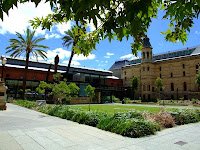 Bright, sunny day and no zoom to speak of. Auto exposure and manual focus. Around noon, so there's no wide shadow areas to contend with. This is the raw image, no enhancement. (Summer, 2008; the South Australian Museum of Natural History).
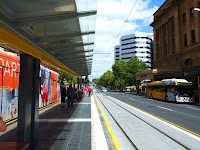 Same day, but much more difficult lighting conditions. Auto focus and auto exposure here, with the photographer standing in deep, deep shade at the tram stop, shooting out into sunlight that was extremely bright. Notice that the camera's auto exposure mechanism is able to capture good detail in both bright and darker areas. (North Terrace tram stop, end of the line, opposite the casino.)
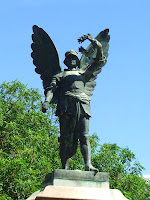 The war memorial in Angaston, in the Barossa ... in eye-destroyingly bright conditions. Sun is on the shoulder, so you get a good blue sky, though not quite the rich, dark blue you'd get with a polarizing filter on an optical camera. Don't fret about not being able to polarize efficiently with a digital: you can get the same effects with software, when you get home. Auto exposure, manual focus. (Summer of 2007.)
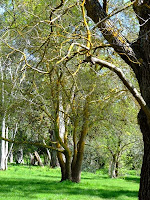 A bright sunny noon in mid-spring. Good sunlight but not too bright, with the camera position in patchy shade and very difficult lighting conditions right ahead -- patches of light and dark. The camera made a good job of averaging the whole thing. Manual focus keeps a tight, sharp image. (Belair National Park, South Australia).
The next thing you're thinking about is the quality of the zoom...
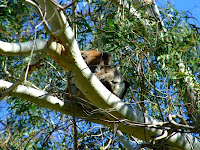 Top of the optical zoom -- no digital zoom here. Koala asleep in a tree, in extremely bright light. The tree was actually moving quite a lot in a decent breeze, but the virtual shutter and aperture were small enough to stop it completely. Auto exposure on this one -- manual focus. On auto focus, the camera repeatedly focused on the bough slightly in front of the koala, and the bear was fuzzy, out of focus. (Belair National Park, spring/summer.)
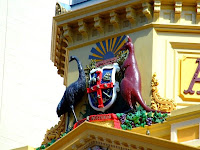 Again, top of the optical zoom, no digital zoom. The Australian coat of arms, crest, national insignia, whatever you want to term it ... very good lighting conditions, bright sunlight, but shooting close to the sun. Notice the whited-out sky. The sun is close to overhead in this picture, and I'm impressed with the detail and color the camera captured. A government building on North Terrancem Adelaide, S.A.
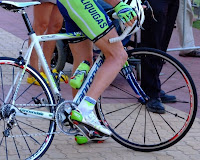 Top of the optical zoom. A close shot of a pair of million dollar legs. (High wow factor there...) Lighting conditions were not so brilliant; late afternoon shadows in the lee of a massive building. The camera kept great focus and color -- everything on auto in this picture. (The Tour Downunder, at Glenelg, 2008.)
The next thing on your minds is, "Okay, what about the digital zoom?"
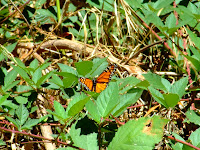 Top of the digital zoom ... a butterfly in the brambles, quite a long way off -- and this is the whole frame, not a crop from the middle of it. Very good lighting conditions -- good and bright, but not too bright (which can be a problem in Australia). Good color and not too much noise in the image ... but this is a photo captured in good light. As a rule of thumb, the lower the light, the worse your digital zoom shots will become. (Morialta Falls, South Australia.)
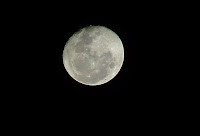 Camera doing duty as telescope! Maximum digital zoom -- and manual exposure as well as manual focus. Without manual control, your chances of getting a digital camera to give you a great moon photo are not so good. You can see quite a lot of noise (grain) in this shot, but it's not too bad at all, when you think about what the camera was asked to do! (Shot from the backyard.)
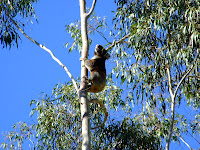 Close to the top of the digital zoom, but in perfect lighting conditions. The picture shows a little noise, but nothing you'd complain bitterly about. This little guy was waaaaay off; the sun is on the shoulder -- the bear is actually in a tiny patch of shade cast by the canopy of the next tree ... and the trees were swaying about massively in a very lively wind. Such shots are pot luck -- but I did manually focus him. Auto exposure. (Belair, 2008.)
Having looked at telephoto, you're thinking, "what about closeup shots?"
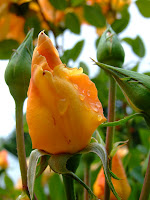 This one is a telephoto closeup -- stand way back and zoom on your subject, and tweak the focus manually. Auto exposure -- and somewhat difficult light. It's been raining ... it's about to rain again. (Handorf, South Australia, 2008.)
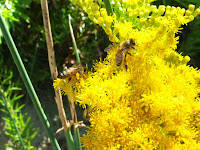 If you can actually get close to your subject, the camera does quite well. The minimum lens-to-subject distance is about 8", so you can just get in close, before you even start to look at macro work. However, focus is a bitch when you get in close. If you didn't have the option of manual focus, you'd be sunk. (Wellington, Murray River, S.A.)
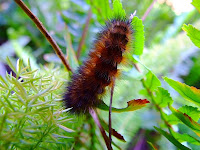 To get closer yet, go to the macro setting ... again, you'll want to use manual focus, though the auto exposure is very reliable on macro shots. If you need to get still closer...
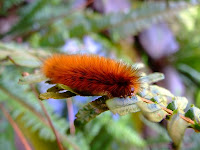 The 6500 has a super-macro setting, too. You can virtually sit the lens right on top of your subject. It's inclined to pop the flash when you're this close, so be sure to deliberately turn OFF the flash. Also, in super-macro, manual focus is prerequisite ... I don't think I ever got an auto focus on this setting. Fortunately, manual focus is just too easy.
So, you're thinking, what about poor lighting conditions...?
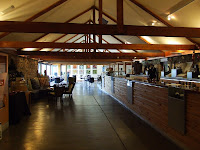 It was almost dark in here -- a Barossa winery open for tastings. The same rules apply here as with optical: you'll have to hold the camera VERY still, or mount/sit it on something, to avoid shake and blur. Also, the camera is inclined to set the virtual film speed sky-high, if you leave it on automatic. The higher the ISO ratings, the more noise (grain) you'll get. Take control: set your film speed (which sounds Irish, I know), and practise your "nitro fingers."
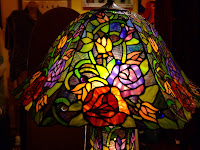
The light is almost nonexistent ... the shot was an experiment, to see what the camera could make of a Tiffany lampshade in a gift store in Handorf, SA ... the results are great. Auto exposure ... I think I used manual focus, though I couldn't swear to it.
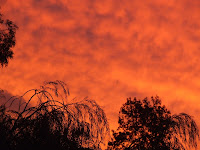 Here's the ultimate headache: get the camera to stop adjusting the exposure, and "correcting" your sunset shots back into normal daylight! Take it OFF the auto exposure setting, and but it onto the "N" (for normal) setting. Then, the camera records exactly what it sees, without getting smart. Also, set your ISO rate in 100 or 200, and do the "nitro fingers" thing again. Shot from the backyard.
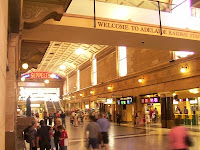 Very nasty lighting conditions. It's actually quite dark in the Adelaide Railway Station ... as witness, the blur on the folks going by. The camera is on auto, and captures the color extremely well; focus is very sharp, but you're susceptible to shake and blur, so hang onto it.
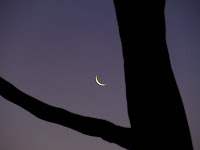 The camera is sitting on the top rail of the balcony, or this shot would not have been possible. Very late twilight ... manual focus on the crescent moon, manual exposure control too. Shot from the backyard.
So, just how far can you go with this manual focus thing?
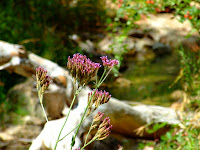 You can pretty much get back to the kind of shots you enjoyed with your optical SLR! This shot is an exercise in digital manual focus ... pick the wild flower out of a chaotic background ... and do it in a breeze, with the flower bouncing around. Auto exposure -- the lighting conditions were fair. (Morialta Falls, S.A.)
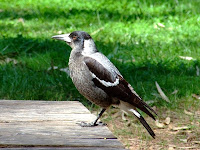 Same story: getting tack-sharp focus is difficult for even the best digital cameras. So don't leave it up to the mechanism: take control. Check out these feathers. (Juvenile Australian magpie; Belair National Park.)
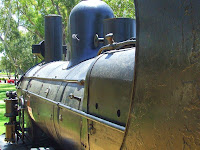 The absolute other side to the coin on focus is depth of field. That is, how much of the subject is in focus, as it slants away from the camera? The rule is, the smaller the aperture, the greater the depth of field. Take control: manual exposure. Small aperture gives depth of field -- with a loooong virtual shutter speed as the tradeoff. Hold the camera very steady ... the same rules apply as for optical cameras, you just find yourself clicking, paging and beeping through menus to get what you want! (Retired steam loco in a playground in Nuriutpa, Barossa, S.A.)
Cheers,
MK
It's very true that a good digital camera makes it much easier to get good shots (put another way, you'll get fewer real stinkers!) ... but to get very, very good shots with a digital, you do need to know a bit about photography itself. A little theory goes a long way.
It's also very true that a good photographer will get better images from a poor camera than a poor photographer will get out of a good camera. And when you're thinking about laying down maybe $250 to $750 for a digital which is not even an SLR (they're a lot more expensive), you owe it to yourself to do your "due diligence" beforehand.
Yesterday I talked about a couple of cameras which I would recommend ahead of the rest for folks who don't want to go the whole hog and drop thousands on full-professional gear. After years as a professional photographer, I took the switch to digital as a mixed blessing. It's cheaper to take pictures, because you save to flashcards, not film ... but the cameras are much more expensive. And when you're used to having 100% control over every little thing in the camera (I'd used a couple of Pentax K-1000s, plus an Olympus OM-10 and a wide selection of lenses that fit all three bodies, for a loooooong time), well, digital cameras can be infuriating. You'll be paging through menus and beeping your way through lists of lists, to change settings, for godsakes -- by the time you get the bloody thing set, the kangaroo has hopped off, the fullback is at the other end of the field, the goalie has not only headed the ball out, but he's dropkicked it into the other end penalty box, the Ferarri is two states away ... the flying saucers are back on Mars. Right?
Okay, that's the ultimate downside of ANY digital, and as someone recently said, "Deal with it." It's a fact of digital life, and ain't gonna change any time soon. So, get your head around clicking and beeping your way through pages and menus, and ...
Take a closer look at the theory of photography, as it applies to digital cameras.
I'm uploading a number of photos here, each (hopefully) illustrating some point, as well as being a damned nice, and/or interesting photo. Click on each to get a larger view. All these images were captured with the Fuji FinePix S6500fd, at six megapixel resolution. Wish I could show you images by the Panasonic Lumix, but alas -- no can do at this point. Maybe later.
The first thing you want to look at is "normal conditions" ...
 Bright, sunny day and no zoom to speak of. Auto exposure and manual focus. Around noon, so there's no wide shadow areas to contend with. This is the raw image, no enhancement. (Summer, 2008; the South Australian Museum of Natural History).
 Same day, but much more difficult lighting conditions. Auto focus and auto exposure here, with the photographer standing in deep, deep shade at the tram stop, shooting out into sunlight that was extremely bright. Notice that the camera's auto exposure mechanism is able to capture good detail in both bright and darker areas. (North Terrace tram stop, end of the line, opposite the casino.)
 The war memorial in Angaston, in the Barossa ... in eye-destroyingly bright conditions. Sun is on the shoulder, so you get a good blue sky, though not quite the rich, dark blue you'd get with a polarizing filter on an optical camera. Don't fret about not being able to polarize efficiently with a digital: you can get the same effects with software, when you get home. Auto exposure, manual focus. (Summer of 2007.)
 A bright sunny noon in mid-spring. Good sunlight but not too bright, with the camera position in patchy shade and very difficult lighting conditions right ahead -- patches of light and dark. The camera made a good job of averaging the whole thing. Manual focus keeps a tight, sharp image. (Belair National Park, South Australia).
The next thing you're thinking about is the quality of the zoom...
 Top of the optical zoom -- no digital zoom here. Koala asleep in a tree, in extremely bright light. The tree was actually moving quite a lot in a decent breeze, but the virtual shutter and aperture were small enough to stop it completely. Auto exposure on this one -- manual focus. On auto focus, the camera repeatedly focused on the bough slightly in front of the koala, and the bear was fuzzy, out of focus. (Belair National Park, spring/summer.)
 Again, top of the optical zoom, no digital zoom. The Australian coat of arms, crest, national insignia, whatever you want to term it ... very good lighting conditions, bright sunlight, but shooting close to the sun. Notice the whited-out sky. The sun is close to overhead in this picture, and I'm impressed with the detail and color the camera captured. A government building on North Terrancem Adelaide, S.A.
 Top of the optical zoom. A close shot of a pair of million dollar legs. (High wow factor there...) Lighting conditions were not so brilliant; late afternoon shadows in the lee of a massive building. The camera kept great focus and color -- everything on auto in this picture. (The Tour Downunder, at Glenelg, 2008.)
The next thing on your minds is, "Okay, what about the digital zoom?"
 Top of the digital zoom ... a butterfly in the brambles, quite a long way off -- and this is the whole frame, not a crop from the middle of it. Very good lighting conditions -- good and bright, but not too bright (which can be a problem in Australia). Good color and not too much noise in the image ... but this is a photo captured in good light. As a rule of thumb, the lower the light, the worse your digital zoom shots will become. (Morialta Falls, South Australia.)
 Camera doing duty as telescope! Maximum digital zoom -- and manual exposure as well as manual focus. Without manual control, your chances of getting a digital camera to give you a great moon photo are not so good. You can see quite a lot of noise (grain) in this shot, but it's not too bad at all, when you think about what the camera was asked to do! (Shot from the backyard.)
 Close to the top of the digital zoom, but in perfect lighting conditions. The picture shows a little noise, but nothing you'd complain bitterly about. This little guy was waaaaay off; the sun is on the shoulder -- the bear is actually in a tiny patch of shade cast by the canopy of the next tree ... and the trees were swaying about massively in a very lively wind. Such shots are pot luck -- but I did manually focus him. Auto exposure. (Belair, 2008.)
Having looked at telephoto, you're thinking, "what about closeup shots?"
 This one is a telephoto closeup -- stand way back and zoom on your subject, and tweak the focus manually. Auto exposure -- and somewhat difficult light. It's been raining ... it's about to rain again. (Handorf, South Australia, 2008.)
 If you can actually get close to your subject, the camera does quite well. The minimum lens-to-subject distance is about 8", so you can just get in close, before you even start to look at macro work. However, focus is a bitch when you get in close. If you didn't have the option of manual focus, you'd be sunk. (Wellington, Murray River, S.A.)
 To get closer yet, go to the macro setting ... again, you'll want to use manual focus, though the auto exposure is very reliable on macro shots. If you need to get still closer...
 The 6500 has a super-macro setting, too. You can virtually sit the lens right on top of your subject. It's inclined to pop the flash when you're this close, so be sure to deliberately turn OFF the flash. Also, in super-macro, manual focus is prerequisite ... I don't think I ever got an auto focus on this setting. Fortunately, manual focus is just too easy.
So, you're thinking, what about poor lighting conditions...?
 It was almost dark in here -- a Barossa winery open for tastings. The same rules apply here as with optical: you'll have to hold the camera VERY still, or mount/sit it on something, to avoid shake and blur. Also, the camera is inclined to set the virtual film speed sky-high, if you leave it on automatic. The higher the ISO ratings, the more noise (grain) you'll get. Take control: set your film speed (which sounds Irish, I know), and practise your "nitro fingers."

The light is almost nonexistent ... the shot was an experiment, to see what the camera could make of a Tiffany lampshade in a gift store in Handorf, SA ... the results are great. Auto exposure ... I think I used manual focus, though I couldn't swear to it.
 Here's the ultimate headache: get the camera to stop adjusting the exposure, and "correcting" your sunset shots back into normal daylight! Take it OFF the auto exposure setting, and but it onto the "N" (for normal) setting. Then, the camera records exactly what it sees, without getting smart. Also, set your ISO rate in 100 or 200, and do the "nitro fingers" thing again. Shot from the backyard.
 Very nasty lighting conditions. It's actually quite dark in the Adelaide Railway Station ... as witness, the blur on the folks going by. The camera is on auto, and captures the color extremely well; focus is very sharp, but you're susceptible to shake and blur, so hang onto it.
 The camera is sitting on the top rail of the balcony, or this shot would not have been possible. Very late twilight ... manual focus on the crescent moon, manual exposure control too. Shot from the backyard.
So, just how far can you go with this manual focus thing?
 You can pretty much get back to the kind of shots you enjoyed with your optical SLR! This shot is an exercise in digital manual focus ... pick the wild flower out of a chaotic background ... and do it in a breeze, with the flower bouncing around. Auto exposure -- the lighting conditions were fair. (Morialta Falls, S.A.)
 Same story: getting tack-sharp focus is difficult for even the best digital cameras. So don't leave it up to the mechanism: take control. Check out these feathers. (Juvenile Australian magpie; Belair National Park.)
 The absolute other side to the coin on focus is depth of field. That is, how much of the subject is in focus, as it slants away from the camera? The rule is, the smaller the aperture, the greater the depth of field. Take control: manual exposure. Small aperture gives depth of field -- with a loooong virtual shutter speed as the tradeoff. Hold the camera very steady ... the same rules apply as for optical cameras, you just find yourself clicking, paging and beeping through menus to get what you want! (Retired steam loco in a playground in Nuriutpa, Barossa, S.A.)
Cheers,
MK
Tuesday, September 30, 2008
Fairbanks on my mind (alas, not Douglas)
Fairbanks is a place as well as a person ... actually, two people if you count Doug Jr. as well as Snr. -- but you'd have to be a movie historian to know either one of them. We've reached a point where kids don't know who Harrison Ford is, and it takes an archaeologist to delve back far enough through time to unearth 2001: A Space Odyssey. Somebody had better invent a time machine sometime soon, or we're going to lose the 1960s utterly.
That said ... it's Fairbanks the place which is on my mind today, though I couldn't tell you why. Brain wiring or some such abstract human expression. I just stumbled over the data highway to link back through to the mnemonic circuits where Fairbanks is stored in the chaos and clutter of my memory. For some reason, the sounds and smells of the place -- the fell of loess between my teeth! -- are all bright and sharp.
So,with Fairbanks on my mind, let's go there, if only in pictures. Here's a photo essay, complete with a yack-track. Better than getting roped in for a slideshow with beer and popcorn, because this way you can turn me off when I get boring. The images were scanned at 200dpi, so click on a picture for a larger view. The only thing I haven't done (no time today: gotta work) is enhance them to take UFOs out of the prints. Sorry ... but if you ever want to be reading THE LORDS OF HARBENDANE, I have to stop blogging sometime, and start working! Here goes:
FAIRBANKS MEMORIES
 The Chena River runs through the heart of downtown ... if you can call it "downtown." You're looking at it. Downtown, that is. Alaskans call Fairbanks a "city," but even Aussies would call it a town. At 35,000 people, or thereabouts, it's something like Murray Bridge or Mount Barker, which are towns in Adelaide's neck of the woods...
 It's actually prettier in winter, when a light snowfall will turn the whole landscape into a sort of "winter wonderland," right out of an animated movie. As a bod from downunder who hadn't seen snow in 25 years (since the family moved out from the UK) I was enchanted. Also frozen to the bone marrow. I was wearing two pairs of socks under the boots, leggings under the ski pants, thermal shirt, plus long-sleeved tee-shirt, plus sweater, plus jacket, insulate gloves, and hat. And I was still cold. I'd fly out of Australia in February or March, where it would be 95 degrees (summer), and arrive in Fairbanks ... on a night flight, of course, which would land long after nightfall, with temps of 20 below zero and a skating rink for a parking lot. Woah, such fun. (And the weird this is ... it was. It was different, challenging, and there's something of the "exotic" about Alaska -- unless you're an Alaskan, of course, in which case it's just same old, same old. They think Australia is exotic. Yaaawwnnn.)
 Alaskaland is a kind of theme park, where Alaskan history is sorta-kinda encapsulated within a ... park-type area. It's bordered on one side by Airport Way (which is the main drag running through what they call "Retail Row," linear miles of stores, and on the other side by the Chena River, which follows the line of the railroad for a few miles. My favorite area was the riverbank behind Alaskaland, where several little footbridges went over the water. You could stand in the middle and watch beavers on a sunny day, or hike over and take weird tech-noir photos of the railroad marshaling yards ... or see the ice carvings, in winter: the World Ice Art Championships are held about a mile from what you see above.
 The heart of downtown is Golden Heart Plaza ... Pioneer Square ... with a clock that plays musical arrangements on its chimes (Frank Sinatra, Sound of Music, Camelot ...!) and a fountain around which are inscribed, on bronze tablets, the names of the pioneer families who opened up the region in the days of the riverboats and gold miners. Also, see the great bronze statue, the monument to the pioneers. The bronze stands in the middle of a pool and fountain ... which freezes solid in winter. There's another shot of this, below, in summer.
 Fall arrives at UAF, on a hill outside and slightly above the town. This view of UAF is from the back side of the campus, around by the paddocks used for experimental agriculture. The campus is vast, the size of a town within itself, with students from every continent. It has a great museum, complete with Blue Babe," a mummified ice age bison. Very impressive.
 On a summer day, looking down from the campus, you can see all of Fairbanks, and the snake-like meander of the Chena River, which almost ties itself in knots in places. Looking back at this photo, I do believe it was cottonwood time. Folks in the US will know what this is about, but for benefit of Aussies and others ... "cottonwood" is a tree that grows like a weed throughout many parts of the US. Alaska is full of it, and in springtime the trees fill the air with strands of ... well, cotton ... pollen. You lie flat in a patch of sun and look up, and you think it's snowing again. Very pretty -- not quite so great for those who have allergies. Fortunately, I was immune at the time.
 And what would a photo-tour of Fairbanks be, without at least one good refinery shot? A large part of Alaska is about oil. There's no drilling in the Fairbanks region, but there are several refineries. This one belonged to MAPCO Alaska Petroleum, which in 2000 or so became Williams (at least as far as gas stations were concerned). Don't know if they changed the name of the refinery, but the service stations all changed. This photo was taken on a hot, dusty afternoon in 1997.
 There you are, Virginia, Santa Claus does exist, and this is where he lives when he's not jetting all over the world delivering parcels. Seriously ... this is a store which sells Christmas goods all year around, located at North Pole, which is (!) south of Fairbanks by about fifteen miles or so. Fairbanks and North Pole are part of the "Fairbanks North Star Borough," which is what the Lower 48 would call a county. Cute store. Weird, but cute.
 This was fun. There are very few roads that run OUT of Fairbanks, and this is one of them. It goes about 70 miles to Chena Hot Sprints (a resort hotel in the wilderness, founded on the, uh, hot springs), and there, the road stops. In spring, the hundreds of creeks over which the road crosses become swollen with meltwater. The water can overwhelm the road and close it, or ... it can be a foot deep over the road and be big fun. Like this. I was taking the photos here. The trick is to hit the water fast, and throw up a spray about ten feet high.

Winter ... they plow the streets out, or you wouldn't be able to make your escape to get to work. This area of Fairbanks is known as Arctic Park -- a suburb, where Lathrop and Kennicott intersect and the Captain Bartlett Inn stands on the corner of Airport Way, just around the corner from the Big Dipper Ice Arena. Around the back of this hockey rink, the City of Fairbanks dumps the snow which has been plowed out of your streets. I learned how to drive on snow and ice in the parking lot there, which doubles as a snow dump. Wheeee. And here's the little car that shared so many adventures. A 1996 Pontiac Sunfire, as imaged by Keegan on one knee in the snow, in March 1998, off one side of a road ... I have no idea where, short of, uh, Fairbanks, Alaska! You would not believe the places this car went, and the things it did. If you click to enlarge the photo, you'll see an electrical appliance plug sticking out of the radiator grill. USns will know what this is (well, Floridans might not), but for the benefit of those of us who hail from more tropical climes, I'd better explain. When you park a car outside in Fairbanks winter nights (which can be fifty or sixy below zero), if you don't want the engine block and oil pan to be frozen solid, the battery flat and the radiator turned to solid glue, you (!) plug the car in for an hour or two before you want to start it in the morning; or you leave it plugged in all night. You run a loooooong extension cable to a powerpoint in or on the house and feed the car some juice ... keep the core temperature of the engine up just high enough so it'll actually turn over for you. Cooooool.
 And this is the one you've been waiting to see, right? The pipeline. The Trans-Alaska Pipeline itself ... the pride of the Alyeska Pipeline Company. Crude from the North Slope travels at high velocity to the oil terminal at Valdez, on Prince William Sound. Alaska has been about oil for a long, long time (before which, it was about gold), and very soon it'll be about gas. There's not much oil left in them thar hills, but there's enough gas to be interesting. The problem is, getting it OUT of those hills without killing the environment. Think about this: the GROUND in the tundra is flammable. Seriously. You can strike a match and set fire to permafrost, due to the percentage of methane, or marsh gas, frozen in this ground. You really want to be dilling for gas in the middle of the equivalent of a lake of gasoline...? Hmmmm.
 As promised above, the image of the tribute to the pioneers memorial statue, in summer, when the fountains are running and you can actually see the engravings on the bronze tablets. Golden Heart Plaza on a glorious day. In the background, in the early afternoon (when this pic was taken), the clock would be chiming out selections from Camelot or Oklahoma! for your listening enjoyment, while coach loads of tourists from Japan and Korea, Russia and parts of America itself, go through. I would take a half hour, sit by the river and watch the world go by: people watching.
 And here's a pungent memory. Only in Alaska! Oh, okay, and Canada, all right, point taken. Caribou Crossing. One of my best memories is of fiddling with a long lens off one side of the Richardson Highway, while a herd of caribou -- wild as anything in Jack London -- galloped into the blue distance. I gave up on the lens and just enjoyed the sight. One of those "never forgotten" moments which come along too rarely.
And now --
Back to work. More tomorrow -- when DreamCraft and Keegan might just have something new to show, and I hope to be asking for test pilots. In other words, there's a couple of new Keegan book pages you might like to help us test, and tell us what you think.
Ciao for now,
MK
Sunday, September 21, 2008
As through a lens ... that needs cleaning
This post was supposed to go up late yesterday, but things came up and I lost the opportunity to post again. (No, not computer headaches, or Invasion of the Rellies; I think I swallowed a Thai chili. My upper digestive tract may never be the same again.)
So here is the post, maybe fourteen hours late. I'm up to my eyeballs with politics for the time being, so I'm going to talk about something else this time.
They way we view the world is interesting in so many ways, not least of which is how the world is presented to us for viewing. That statement might seem to have the qualities of a palindrome, but think about this.
What do you really know about ... oh, say, the Battle of Britain? I use this as an example because the anniversary just went by: September 15 ... 915, if you will ... the date when Britain could reasonably be said to have won its freedom from Nazi Germany in an air war, and like 911, it's never likely to be forgotten ... so long as you're British or have the connections).
Now, about one in a million people will say, "I know everything about it, son, I bloody fought in it, you grew up in a free country because kids like me were up there in the Spitfires and Hurricanes, giving our lives to keep Hitler out of this country." An unfortunate percentage of people will say, "What battle, of where?" They can find Britain on a map (or, I hope they can!), but they're just as likely to think of the Spanish Armada as World War II, when pressed on the subject --
 And by far the majority of people will say, "I saw the movie."
And a very good movie it is. Michael Caine (The Dark Knight), Christopher Plummer (National Treasure; The Imaginarium of Doctor Parnassus), Robert Shaw (Swashbuckler) Lawrence Olivier, Ralph Richardson , Ian McShane, and a stellar cast all elbowing for screen-time, because everyone wanted to be in this movie. Okay, it's true that Hollywood "did a number" on it: the facts had to be folded, spindled and mutilated to fit the timing, pacing and length of a motion picture -- if movie makers didn't do this, the audience would fall asleep or walk out and say, "What a rotten movie." So, sure, you can criticize the film for having been "Hollywoodized" ... but I can guarantee to you, the audience stayed awake!
The gist of this post is actually in the above paragraph. Our own history, the world, foreign cultures, other people's lives and loves, religions and traditions, are caught on film (or tape, or flash cards. Makes no difference), and then the whole "raw" capture goes through the editing process. It's digitized, color graded, edited into a sensible sequence according to a script (even documentaries have scripts; and they're often incredible complex. It can be harder to script a doco than a feature film -- ask me why, if you're interested). Parts are cut out; other parts are dramatized; old film is colorized; the sound is re-recorded; voice-over narration is added, Foley and ADL are performed...
Every part of this process is necessary to make any film -- documentary or fiction -- watchable to an audience. You can't afford to be boring; and you can't (often) afford to serve up material that's too gross, too explicit, too radically outspoken on sensitive themes, because you don't want your movie to be rated right off the screen and into the realm of under-the-counter disks sold at dark, sleazy little stores with backstreet entrances.
So the lens through which we perceive everything beyond the range of our own physical eyes (and that's 99.999% of everything) has been cut and polished by teams of professionals. The world as we see and know it is ... a presentation.
 You ever notice how characters in the massive historicals have good teeth? The truth is, the heroes of Gladiator and Troy, Alexander and Kingdom of Heaven would have had teeth like the scurvy scum in Pirates of the Caribbean ... but who's going to come over all wobbly-kneed and romantic over a hero with bad teeth?
That's a really, seriously, horrifically callow case to make, isn't it? Teeth. But it makes the point fast: reality has been skewed. Of necessity.
And the same is true when you get out of the callow examples and start looking at "meaningful" presentations of the world.
What do you know about the Chinese occupation of Tibet? The movie, right? Bradley ... yum. How about your mental images of Apollo 13? Tom Hanks was great in that one. The Vietnam War? Oh, I never missed an episode of Tour of Duty ... Terrence Knox was such a hunk. (Wasn't he, though?!) Or did you see First Blood 14 times? (Woah, Sly had great pecs...) What do you know about New Zealand? Seriously! Well, for a start, you know what it looks like: Middle Earth (you saw the movies). But one would hope and pray you don't think Ancient Greece looked like a cold rainforest full of Maoris! (Though Xena and Hercules were loads of fun, with muscles, great teeth and fabulous hair galore, trust me, Greece don't look nuthin' like New Zealand.) Your take on Vikings? Antonio Banderas was terrific in that one ... or can you remember back to Kirk Douglas and Tony Curtis? (And if you're saying, Kirk and Tony who? Well ... phooey.)
It's as if your windshield is so smeared by bugs, you're seeing little snippets of the world, history, culture. A Chinese movie came out recently (a foreign language film; it might not have played theaters in the States, but it did here). Mongol purports to be a bio of Genghis Khan ... and (honest) they found a way to portray him as a hero, a loving husband, devoted father, and all around staunch character. They simply left our the millions of people who were slaughtered, the enemies boiled alive, the legion of wives and concubines, and the rape victims who were so numerous and commonplace, virtually everyone whose roots are back in Europe is descended from these guys!
Creative editing puts a new and interesting face on history. Here's the problem: what you can do for Genghis Khan in 2008, you can do for Adolph Hitler in 2308 ... and in the public mind, the presentation looms large. Larger than reality, which has been lost in time. Asked, in 2315, "What's your take on Hitler?" Someone is going to say, "Oh, Manfred Schroediger was fantastic in that, I saw it eight times."
Uh huh.
So many Hollywood shows were made in British Columbia in the last 20 years, today's kids can be forgiven for thinking Peru and Turkey both look like the wooded hills right outside Vancouver ... but we'll forgive that one, cuz Richard Dean Anderson was so cute, with the long blond hair and the shy grins, right?
Now, it's perfectly true that documentary filmmakers knock themselves out to achieve Truth, and for this, I applaud them. Personally, I love documentaries; I just don't get the chance to watch very many, because few other people can watch dodos and call it a night's entertainment. (That was a barfing sound I heard from your direction, wasn't it? Admit it!)
So: how many documentary films have you seen in the last month? One? None? Right. You watch the monster feature films, as do we all, and the snazzy TV shows.
 You know what the Himalayas look like: you saw Vertical Limit three times. (Chris O'Donnell was superb in it. So cute. And incidentally, it was shot on a glacier in New Zeland!!) You know much about Mahatma Gandhi? (Well, you know Ben Kingsley must wear dentures, because he took some of them out to play the part of the older Gandhi, who was missing a tooth or two. Yeh. we're back to teeth.)
What's your take on Ned Kelly? (Heath Ledger. Right? Or did you prefer Mick Jagger?) Let's stay in Australia for a second ... you know much about Australian colonial history? (You know all you need to: Magnum PI shot it with a Very Big Rifle. Seriously, Tom Selleck was great, and Quigley Downunder is one of my favorites too. But you should have watched Against The Wind instead, or as well, if you wanted to know a bit about Aussie history.)
Okay, Keegan, cut to the chase for godsakes!
The chase scene: at least as far as the vast, VAST majority of the population of this planet is concerned, we're rewriting history with good teeth and great hair; we're redrawing the map with scenic locations; we depict the religions and traditions of other regions and people in presentation form, adapted and polished to be acceptable to modern audiences ... because movies have to make money, and the censorship ghoul is breathing down the director's neck.
But, who wants to see Christian Bale as Robin Hood, with a set of rotting teeth? And Geronimo scratching his fleas? Come on, get real! Heroes have terrific teeth and no fleas, everybody knows that. Just like the the Andes and the Anatolian Plateau look like British Columbia, and Genghis Khan was as wholesome as George of the Jungle. (Woah, Brendan was sweet eyecandy there...)
Pardon me while I go watch a documentary or two.
Friday, September 12, 2008
Blogging in the vacuum
As promised, the next time the dreaded Blogger's Vacuum struck ... Alaska pictures. I scanned these at 200dpi (because they're worth it), so if they take a little while to download, invest a bit of patience; and click on a pic to get the full size scan, of course.
These pictures were captured between 1997 and 2000, which explains why they're scans. I was using a couple of Pentax K-1000s and an assortment of lenses, with my favorite being a Tamron 80 - 200 zoom. I also used a polarizing filter, which is why some of these pictures look fairly awesome. The old prints were scanned using your basic CanoScan machine, straight into IrfanView for manipulation; and where there are blots in the sky etc. (scanner measles) they were cleaned up with Micrographx. So, here goes:
 Trapper Creek in high summer, an absolutely glorious day. Been there in winter, too, and photographed the exact same view, buried under snow ... will see if I can find the pictures and upload them when the Vacuum strikes again.

A fine (cold) day on the Kenai; one of scores of glaciers makes its way to the sea. Shot from a tour boat, believe it or not. From the picture, you'd think it was warm, but I can tell you, the cold was stinging...

Alpenglow on the Chugach ... or, "the view from Jewel Lake Road, standing right beside the firehouse." You can actually Google the location, put yourself right where I was standing to take this shot. The time was about 11:00 or a bit closer to midnight, and it wasn't cold at all. This was in the "freak August" of 1997 -- people said Keegan had brought the Aussie weather with him...

Now you KNOW you're in Alaska. A float plane makes its landing approach to Lake Hood, which is one of the world's busiest airports. Alaska is full of these planes. Don't let Hollywood fool you: you can NOT drive to Alaskan country towns, other than Fairbanks at t'other end of both the northbound highways. Everywhere else -- which they call the bush, same as the Aussie term -- you fly in and fly out. And this is how you do it...

Fall comes to the tundra. This is Stampede Trail, not so far outside Fairbanks, in the fall of 1999. Again, a glorious day, though Aussies would call it cold. The landscape was bright with color; I blew several rolls of Fujichrome right there, and wished I could do more.

Fall comes to the Fairbanks hills ... the landscape turns into an enchanted forest. Everywhere you look, you think you've blundered into Rivendell without remembering how you go there. You might wish these conditions would last for several weeks, as they do in other parts of the world, but in Fairbanks, fall can last a couple of days. Or a single day, if a weather front comes through just as the trees turn...

High summer ... could be the Kenai or Prince William Sound. Calm conditions and deceptive photo quality: it was bloody freezing. The puffins were out that day, as I recall; cute little buggers, but too small and too fast to photograph well. I never did manage to get a puffin photo worth printing...

Chena Lakes, close to Fairbanks, on a day so calm, there wasn't a ripple on the water. One of those days when you also had the place to yourself, and the quiet was stunning. And then --

The same lake a few months later. FROZEN solid. Anyone bring their skates? The thing about birch woods is that when they drop their leaves, they look really, seriously daggy. The landscape can look kind of "shabby" for months, but you live with it because in season (and especially in fall) birch woods are amazing. Like this:

Early fall in Denli Park. Weather such as you pray for and get on rare occasion in the north. And there's the little car -- Pontiac Sunfire -- which went places and did things most little cars only dream about.
And I do believe I have something important to blog -- nay, to RANT! -- about tomorrow; I just need to research it a little and make sure. If Keegan is going to get up on the soap box, let's make sure the rant is justified. Right.
Ciao for now,
MK
Subscribe to:
Posts (Atom)


 Posts


